facial treatment brand video
Filming a facial treatment with detail, context and restraint
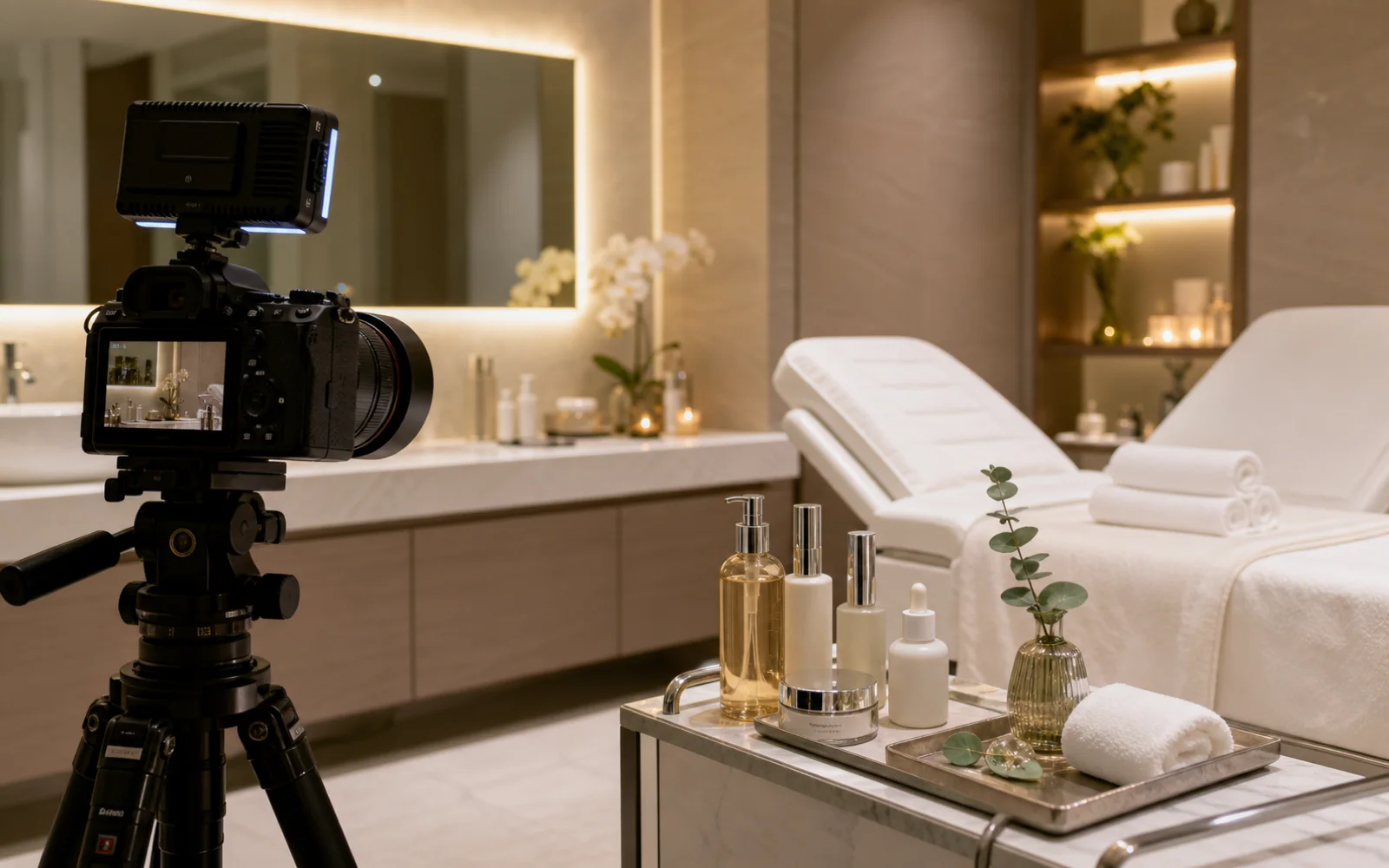
Facial-treatment imagery can become untrustworthy when it is either too clinical or too polished. A stronger film shows the sequence that a client can verify: consultation, preparation, clean tools, careful technique and a calm finish. Close images matter, but they need wider context so viewers understand the room and the professional behaviour around the treatment.
Build the story from the consultation
Start with how needs are discussed and how the treatment plan is explained. The conversation does not need to reveal private information; hands, products and the prepared room can show attentive process without exposing the model. Establishing this step prevents the film from implying that every client receives the same service or outcome. It also gives the edit a logical beginning before any close treatment imagery appears.
Make hygiene visible without over-dramatizing it
Fresh linens, prepared tools, clean hands and product dispensing are useful trust signals when they appear naturally in sequence. Avoid repeating sterile close-ups until the film feels medical unless that is genuinely the setting. Colour should remain realistic, especially for skin. Heavy smoothing, artificial before-and-after comparisons or retouching that changes visible results can weaken credibility even when the production looks expensive.
Choose lenses that respect the subject
A medium view explains posture and room privacy. Macro detail is useful for texture or a precise movement, but it should be brief and agreed with the model. Reflections, overhead rigs and bright lights need to be reviewed before the client enters. The camera team should know which areas are never filmed and who can stop a take immediately if the treatment requires attention.
Turn the shoot into accurate service-page proof
Select a hero image that communicates calm without suggesting a guaranteed result. Use captions to identify the stage of the service rather than making unsupported benefit claims. Short vertical clips can show consultation, preparation and finishing details, while the longer edit preserves the full sequence. The service page should provide the actual duration, suitability and booking information outside the video.
Production checklist
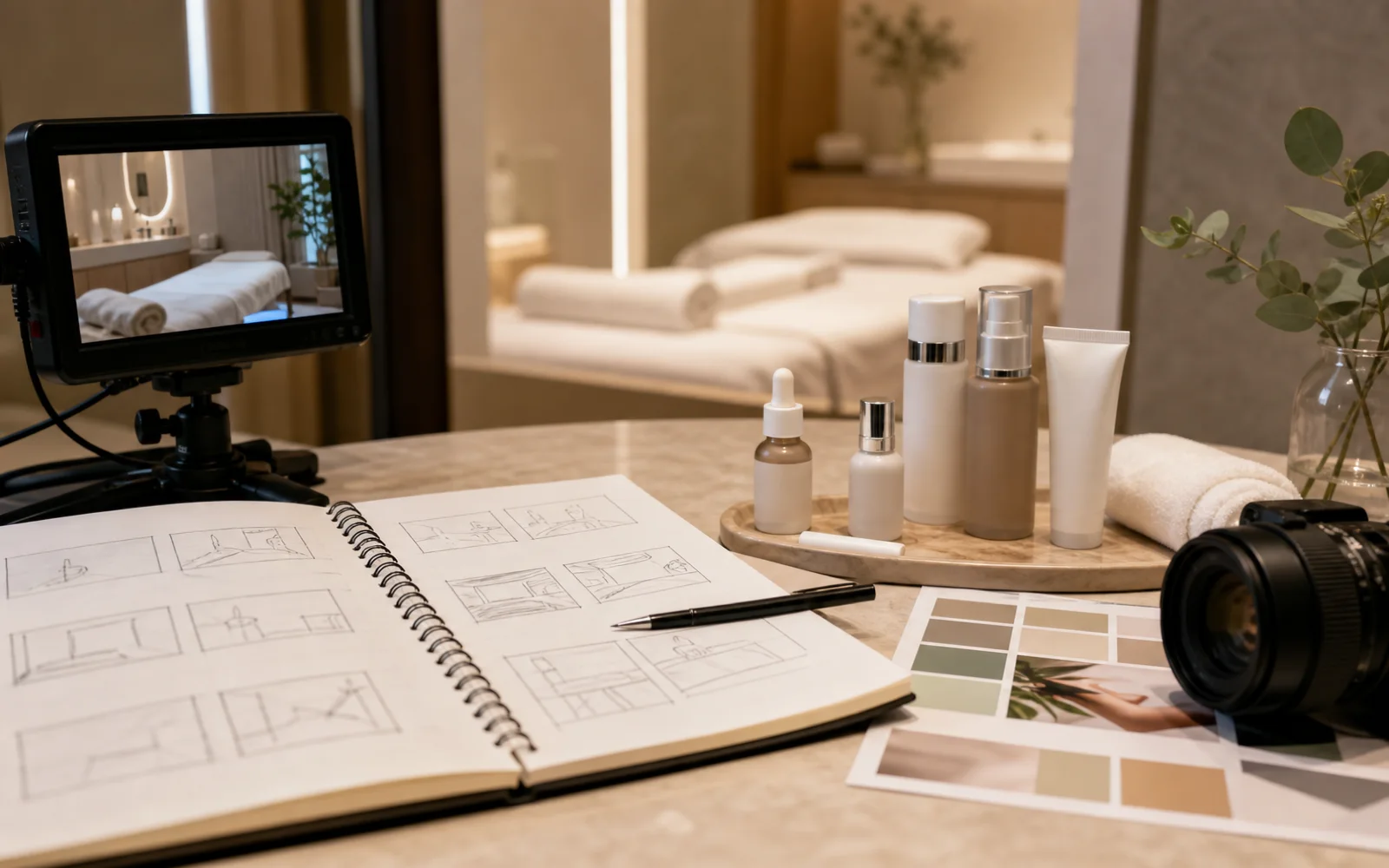
- Agree privacy boundaries with the model
- Show consultation and preparation
- Keep skin colour and texture realistic
- Avoid guaranteed-result language
- Match every clip to accurate service information
For a concrete example of movement designed around a subject and location, review the restrained interior reveals in Domaine de Canaille. The pilot profile and equipment overview explains how Olivier approaches route planning and project preparation.