indoor FPV drone filming
Indoor FPV filming: route design before speed
An indoor route looks effortless only after the space has been measured, cleared and rehearsed. Walls, people and reflective surfaces reduce the margin for improvisation. The creative goal is not to pass through every available gap. It is to show how the location works in a movement the viewer can follow while the production maintains clear stop conditions.
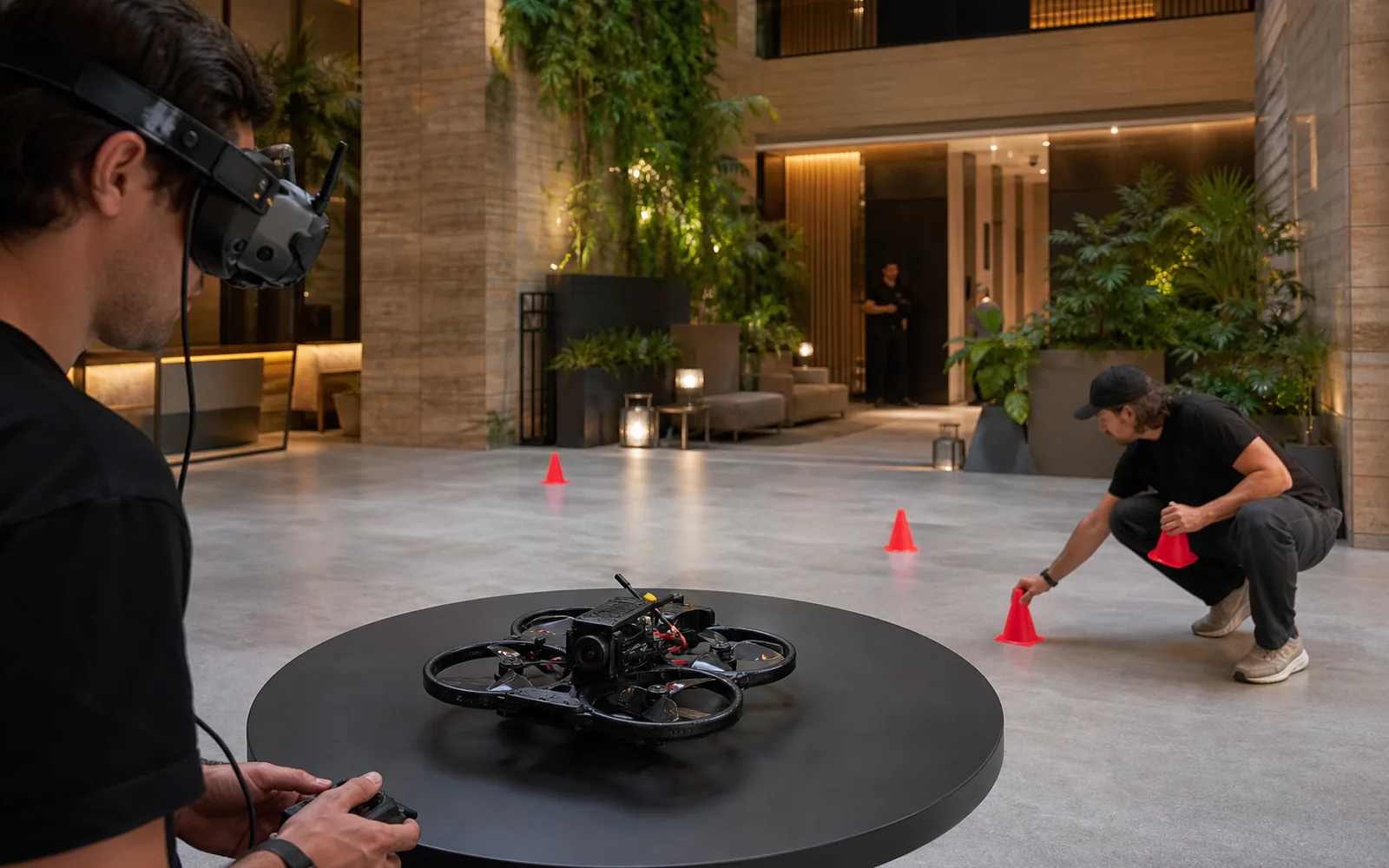
Survey from the pilot's position
Walk the complete path at camera height and from the place where the pilot will stand. Mark blind corners, signal obstacles, moving doors, hanging objects and reflective surfaces. Decide where spotters are needed and how they communicate. A route that cannot be monitored reliably should be divided into shorter sections, even if the final edit is designed to feel continuous.
Clear and rehearse the environment
Remove loose items, protect fragile surfaces and establish a closed set for the actual flight. Rehearse people separately so every crossing has a cue and an escape path. A handheld camera or small rehearsal device can test framing before the aircraft is powered. These steps reduce repeated flights and give performers confidence about where the drone will be.
Build readable changes of pace
Constant speed makes rooms difficult to understand. Use a slow approach, a controlled turn and a purposeful acceleration only where the architecture supports it. Leave clean frames before and after important reveals. The viewer should know what changed between spaces; if the route becomes only a demonstration of agility, the location and subject disappear.
Plan the edit without hiding safety
Transitions can connect separate safe passes, but the shot list should identify them in advance. Door frames, dark surfaces and fast turns can create natural cut points. Capture room tone and ground-camera details so the edit can breathe. A polished sequence does not need to imply that an unsafe or impossible continuous flight took place.
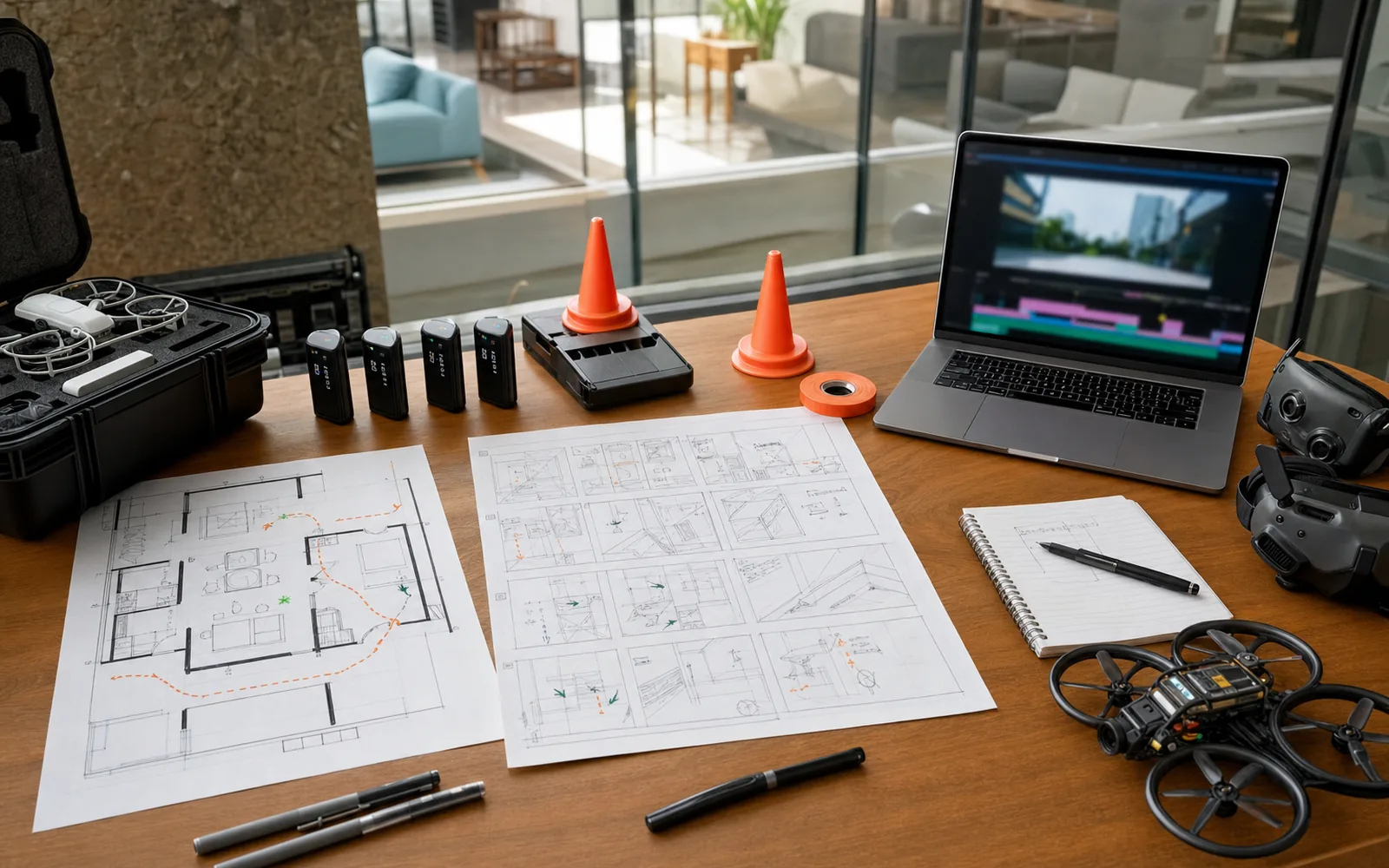
Production checklist
- Walk the path at camera height
- Mark blind zones and pilot position
- Close the set and secure loose items
- Rehearse people without the aircraft
- Record planned cut points and room tone
For a concrete example of movement designed around a subject and location, review the athlete-first indoor sequence in Justine Gallice Teaser. The pilot profile and equipment overview explains how Olivier approaches route planning and project preparation.