luxury barbershop interior FPV
Filming a premium barbershop interior without losing the craft
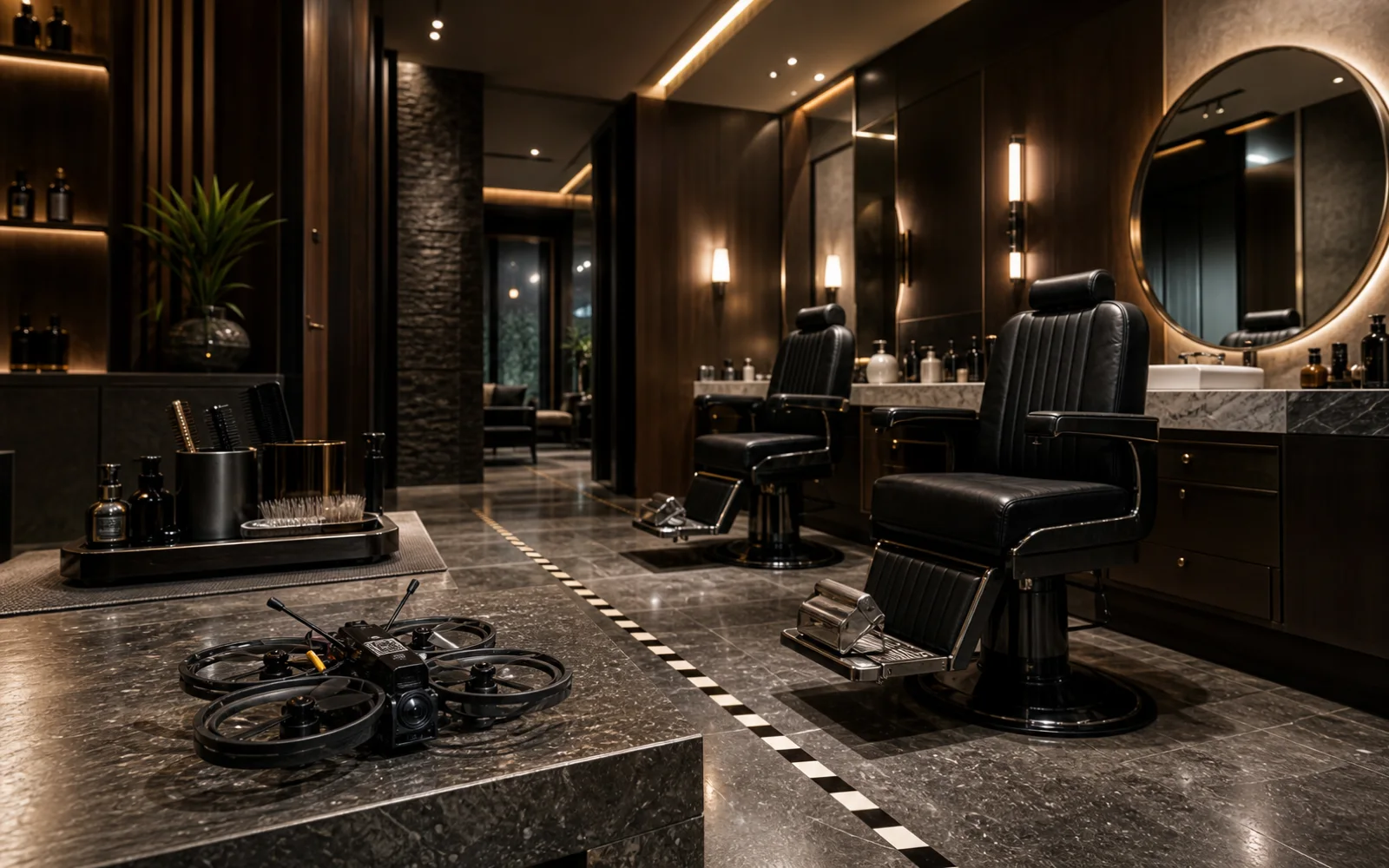
A high-end interior can dominate a barbershop film until the service itself disappears. The stronger approach connects architecture to the client journey: entry, consultation, privacy, chair and finish. FPV may help explain how rooms connect, but ground cameras are better for hands, tools and material details. The production should let each tool do the job it handles safely and clearly.
Survey the route as architecture
Walk from the entrance to the most private service area and note every change in width, height, lighting and reflection. Decide which transition helps a new client understand the space. A single continuous flight is not automatically the best answer; two short controlled passes may preserve composition and protect fragile finishes. Remove temporary clutter without making the room look unused.
Connect materials to human actions
Leather, stone, timber and metal become meaningful when someone interacts with them. Film the chair being prepared, a towel placed on a surface or a tool returned to its station. These actions give scale and prevent the edit from feeling like an empty property tour. Use side light to reveal texture while keeping mirrors and polished counters believable.
Treat privacy as part of the design
Private rooms and discreet circulation can be a selling point, but they should not be demonstrated with an identifiable client who did not expect to be filmed. Stage controlled passes with staff or a consenting model and close off adjoining spaces. Route planning should include where the aircraft stops, where the pilot stands and how the room returns to normal operation after each take.
Balance the architectural and service edits
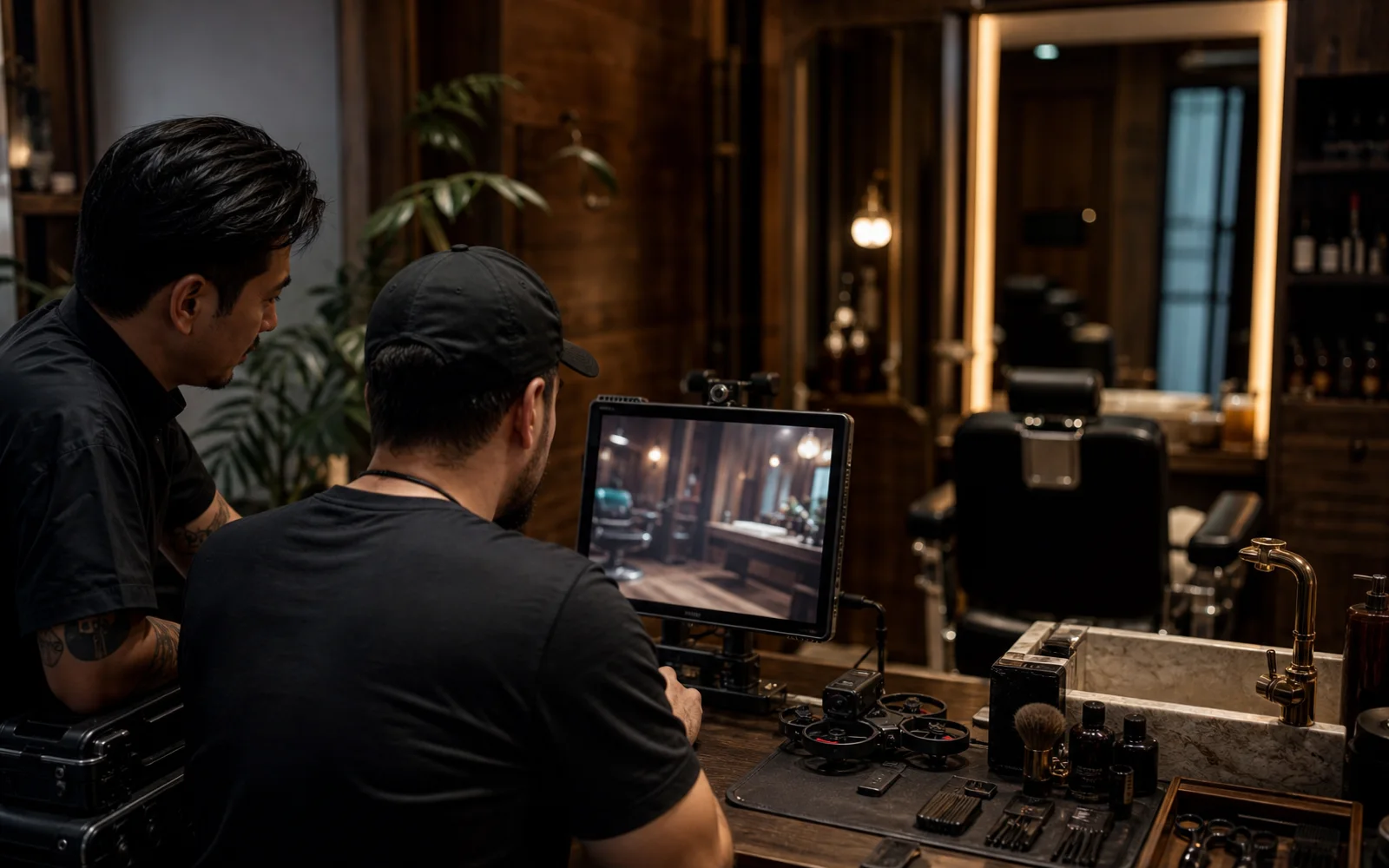
Create one edit that introduces the whole environment and shorter sequences that focus on a room or ritual. Interior stills need level vertical lines and enough depth to show layout. Service clips need closer attention to pace and comfort. Delivering both sets allows the website to explain the location while campaign content concentrates on atmosphere.
Production checklist
- Map entrance-to-private-room transitions
- Choose short safe passes over forced one-takes
- Film materials through real actions
- Close adjacent rooms during flight
- Deliver separate interior and service asset groups
For a concrete example of movement designed around a subject and location, review the spatial transitions in Domaine de Canaille. The pilot profile and equipment overview explains how Olivier approaches route planning and project preparation.