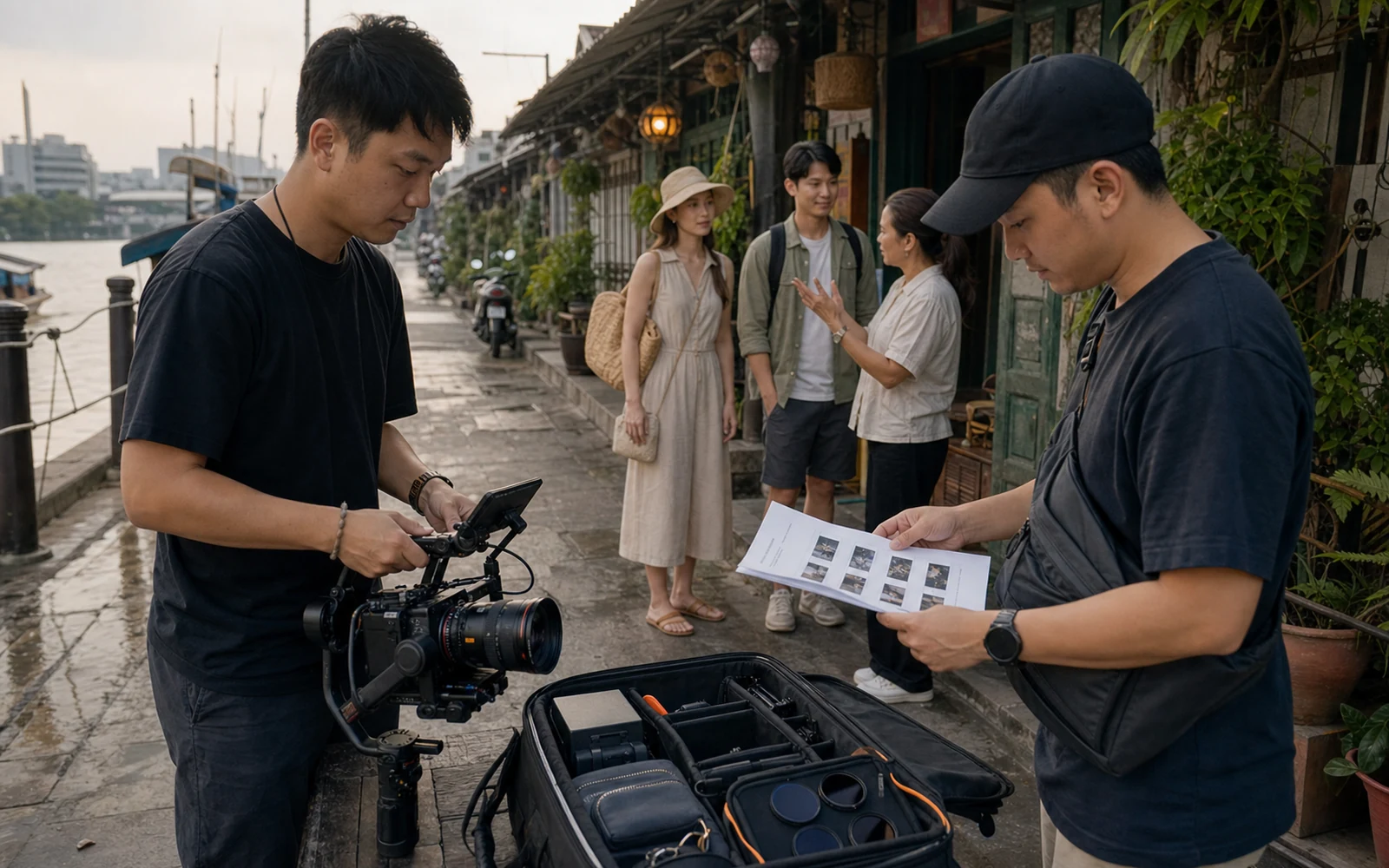
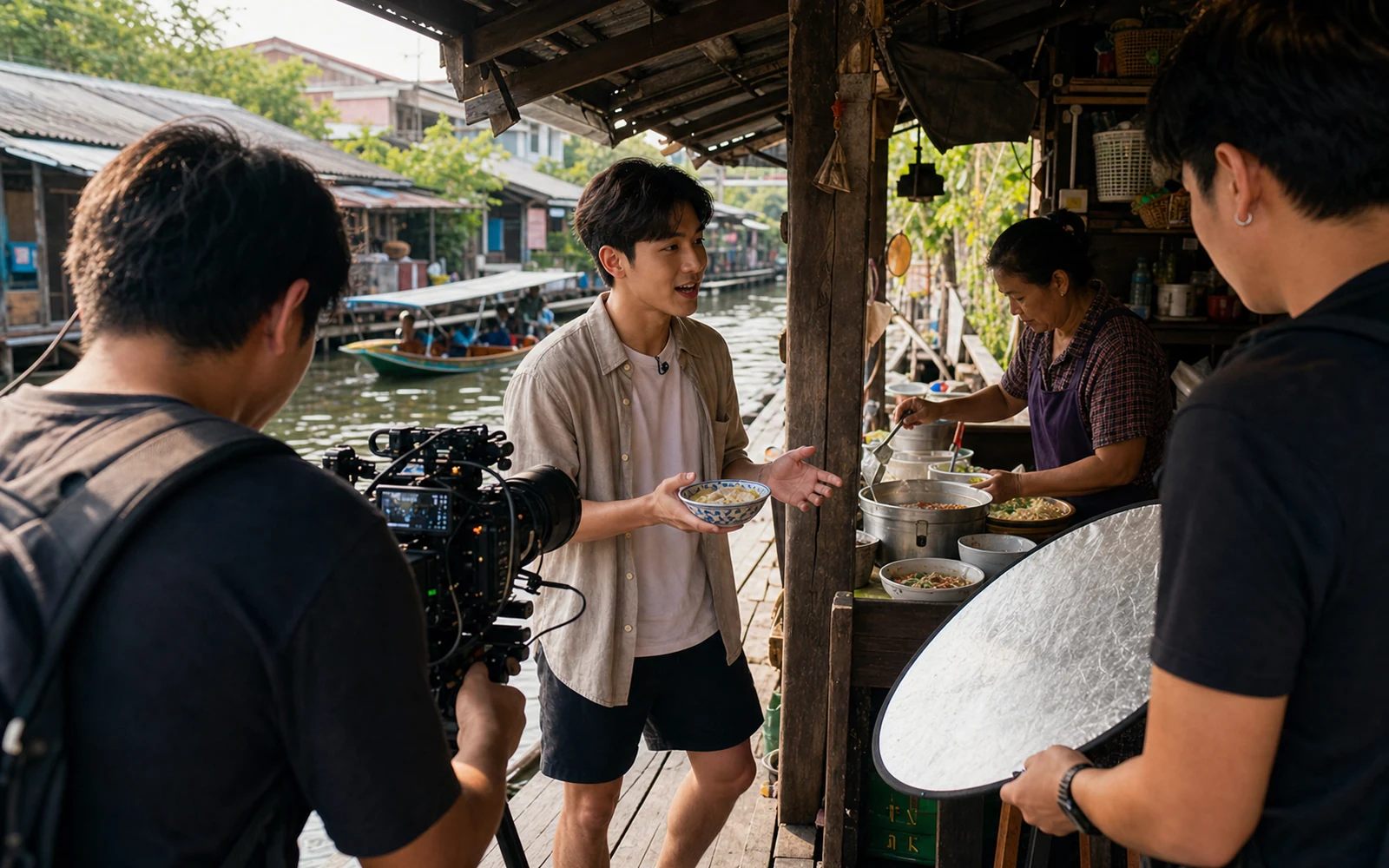
video production Bangkok tourist attractions
Video Production in Bangkok for Tourist Attractions: Filming, Editing and Publishing Social-Ready Experiences
A professional guide to filming and editing videos for Bangkok tourist attractions, with realistic production advice, social-media formats, photography, SEO and discreet 10BestBangkok context.
Why tourist businesses in Bangkok need more than beautiful footage
Bangkok is visually generous, but that can be a problem for a tourism brand. Temples, canal piers, markets, rooftops, boutique hotels, spas, restaurants, river cruises and night experiences already fill every travel feed. A visitor can scroll past ten attractive clips in a minute. To stand out, a business cannot rely only on a pretty view, a phone clip or a generic drone shot. The video must make the experience understandable, believable and easy to choose.
Professional video production gives a tourist attraction a structure. It turns a place into a route, a service into evidence and an atmosphere into a decision. The goal is not simply to prove that Bangkok is beautiful. The goal is to help a viewer understand what will happen, how they will arrive, what the service level feels like, what moment they will remember and why this activity deserves attention before the next option.
That is why a good tourism film starts with a commercial question: what should the visitor want after watching? It might be a canal food walk, a private transfer, a rooftop dinner, a massage experience, a family-friendly activity, a hidden bar, a cultural visit or a premium day in the city. Once the desired feeling is clear, every production decision becomes sharper: lens choice, camera movement, timing, audio, photography, editing rhythm, subtitle style, thumbnails and social formats.
Film the experience, not only the location
The first mistake is to film Bangkok like a postcard. A wide city view can be attractive, but it rarely explains the experience by itself. A visitor wants to know where they are in the story. Is the place calm or energetic? Is it for couples, families, friends or business travelers? Is the activity local, premium, cultural, food-led, wellness-led, nightlife-driven or practical? The video should answer those questions without becoming heavy or over-explained.
For that reason, tourism production often works best as a route. The film can begin with the neighborhood, then show the arrival, welcome, first sensory detail, main service, memorable moment and final result. In a spa, that route may move from reception to lounge to treatment detail. In a rooftop venue, it may move from elevator arrival to the first skyline reveal. In a canal or market experience, it may follow a host, a vendor, a dish, a texture and a reaction. In a transport service, it may show pickup, luggage, comfort, road context and arrival.
FPV, drone or moving camera work is valuable only when it clarifies that route. Movement can connect spaces, reveal a transition or make a service easier to imagine. But it must not become the subject of the film. A shot that is too fast can make a premium service feel nervous. A shot that is too slow can feel expensive but fail on social media. The camera style should follow the business promise, not the other way around.
A discreet local reference for visitor intent
Local guides are useful because they show how visitors compare Bangkok before they decide. A site such as 10BestBangkok.com presents the ten best things to do in Bangkok across forty different categories, which reflects the way travelers think: where to go, what to photograph, where to eat, where to relax, what to do with family, what feels premium and which experience is worth saving or booking. That matters for video production because an activity is rarely seen in isolation. It is compared with nine other options, often in the same scroll session.
We have helped this site with video production and photography around some of the best places to visit in Bangkok. The work was not about creating generic destination imagery. The goal was to make each place easier to identify: atmosphere, access, best moment of day, visual details, visitor flow and the content formats that make sense online. When a guide presents a curated selection, every image and every video should help the reader choose faster without exaggeration or confusion.
This reference stays discreet because it belongs naturally inside the topic. To film tourist attractions well, a production team needs to understand how visitors compare, remember and rank experiences. A local guide is not a detour from the article; it is part of the ecosystem where tourism video and photography actually perform.
Build the brief before the camera comes out
A successful tourism shoot is planned before the crew arrives. The brief should define the primary objective: bookings, brand awareness, a new experience launch, a premium repositioning, regular social content, a website refresh or an ad campaign. It should also define the audience. A family activity, a private high-end tour, a cooking class, a nightlife venue, a boutique hotel and an airport transfer service do not need the same visual language.
The brief should list deliverables early. One production day can create a horizontal film for the website, several vertical clips, hero photos, YouTube thumbnails, Google Business Profile images, paid-ad versions and useful cutaways for future edits. This affects how the shoot is organized. If vertical formats matter, the center of the frame must be protected. If the website needs a hero video, the opening shot should leave room for copy. If photography is important, it needs dedicated time instead of relying on video stills.
The brief also needs constraints: permissions, opening hours, visitor flow, quiet zones, weather, sound issues, cultural sensitivity, faces, releases and delivery timeline. Bangkok can change quickly: traffic, rain, light, crowds and access all shift during the day. A professional production plan includes alternatives so the story survives real conditions.
How to film Bangkok without making it look artificial
Bangkok has hard sunlight, high contrast, reflections, neon, dark interiors and very active public spaces. The answer is not to fix everything in the edit. The answer is to choose the right moment and work with what is real. Early morning and late afternoon often give outdoor locations softer light and more believable color. Night shoots need careful control of signs, faces, reflections and noise so the image does not become harsh or synthetic.
Framing should leave room to breathe. Social video often pushes creators to crop too tightly, but tourism content needs context. A dish should show the hands, table and surrounding atmosphere. A cultural site should show scale, detail and visitor movement. A rooftop should show the view, but also the service, seating, light and sense of arrival. Wide shots orient the viewer, medium shots explain the action and close shots carry texture.
Sound matters too. Even if the final clip is watched without audio, real sound helps the edit feel grounded: water, street ambience, cooking, footsteps, glasses, doors, a short welcome line or a natural reaction. These details can support YouTube, website video and advertising versions. They also create a useful sound library for future content.
Photography is not secondary to video
Video wins attention, but photography often supports the final decision. Booking pages, guide articles, Google Business Profile, reel covers, newsletters and ads all need still images that can stand alone. For a Bangkok tourism business, photos should do three things at once: create desire, explain the experience and remain honest. A heavily retouched image can disappoint the visitor. A purely documentary image can miss the attraction. The right balance is editorial: clear, beautiful and believable.
Plan the photo list beside the video list. A practical shot list might include arrival, wide location, three signature details, a human service moment, a product or food detail, a vertical story frame, a horizontal website image and a clean thumbnail. These images keep the marketing system alive after the video has been posted.
Photography also helps the edit. A strong still can become a thumbnail, a pause in the pacing, an email header or an opening image for an article. On social platforms, the cover frame often decides whether the video starts. It deserves as much care as the most cinematic shot.
Edit for clarity before decoration
Editing is where tourism production becomes commercial. Beautiful images are not enough if the sequence is confusing. For social media, the first three seconds should establish a benefit: a rare view, a human gesture, an arrival, a dish, a service moment, a reaction or a simple promise. After that, the edit should alternate scale: context, action, detail, response and result.
A destination film can run 60 to 90 seconds on a website, but a strong reel may need only 12 to 25 seconds. Paid media may require even shorter versions: six seconds for retargeting, 15 seconds for discovery and 30 seconds for a fuller story. The same shoot should therefore be planned in modules. Each shot should be useful in several combinations.
Color grading should stay elegant and true to place. Bangkok can quickly become too orange, too green or too blue depending on the location. The goal is to make the image desirable without making it fake. Subtitles should be readable on mobile, short and placed away from key faces or service details. On-screen copy should help the viewer understand: location, benefit, duration, best time, neighborhood or booking action. Too much text makes the video feel less premium.
Practical filming advice for tourist attractions
- Film the real visitor route first: arrival, welcome, service moment, signature detail and conclusion.
- Capture at least one clean horizontal website shot and several vertical social shots.
- Shoot key moments twice: one stable version and one more dynamic version.
- Use people precisely: hands, silhouettes, looks, gestures and service interactions, always with consent.
- Avoid long empty-location shots when the activity sells a human experience.
- Capture sensory details: texture, steam, light, sound, movement, service, food arrival or a door opening.
- Respect cultural and religious locations: distance, permission, dress, camera angle and restricted areas.
These rules sound simple, but they change the quality of the result. A tourism video does not need to shout to be attractive. It needs to make the experience easy to imagine and hard to forget.
Practical editing advice for social media
- Build every video around a clear visitor promise before choosing shots or camera movement.
- Capture horizontal video, vertical social cuts and still photography during the same production day.
- Edit for fast comprehension: clear openings, readable subtitles, honest pacing and a natural call to action.
- Create a deliberate thumbnail for each platform instead of letting the app choose randomly.
- Use short, readable subtitles focused on the visitor benefit.
- Keep a clean no-text version for ads, recrops and future campaigns.
- Name exports clearly by place, neighborhood, format, date and use case.
- Publish with useful caption context: access, best time, type of experience, duration and call to action.
A good social edit does not simply follow a trending sound. It communicates a promise. The viewer should understand the activity without reading ten lines, then find the next step quickly: book, visit the site, message the team, save the place or share the clip.
Promote a Bangkok activity without losing its identity
It is tempting to copy whatever style is already working: fast transitions, hyperlapse, giant captions, drone movement and heavy color. But a strong tourist attraction benefits from its own visual language. A spa should protect calm. A food experience should show gesture and material. A cultural visit should respect depth. A nightlife venue should keep energy readable. A premium service should communicate reliability before spectacle.
This is where production experience matters. The certified FPV drone pilot profile helps decide when FPV is useful, when a fixed camera is better, when photography should take priority, when to slow down, when to move and when not to film at all. A travel film work helps think about scale and memory; hospitality route design helps show how a space becomes a route. Technique is never separate from strategy.
For a tourism brand, the best outcome is a coherent asset set: one main film, three to six short social edits, a photo series, thumbnails, paid-media cuts and website images that can last longer than a trend. That coherence makes the activity look better on social media and more credible on a booking page.
Related production strategy guides
An optimized page does not rely only on long copy. It should connect the reader to useful internal resources so they can move from strategy to brief, from proof to contact, and from one production question to the next.
- Drone Video SEO: how video can support conversion without slowing the page.
- Cinematic Wellness Video Guide: how to film calm, privacy and guest flow in a hospitality setting.
- Chauffeur Service Video Bangkok: how to make logistics and travel trust visible.
- Info Olivier Guy: production method, pilot profile and available filming formats.
Our service: video production, photography and editing for tourist places
The service covers the full chain: brief, location planning, shot list, video production, photography, selects, editing, vertical formats, file optimization and publishing advice. Depending on the project, the production can combine ground camera, classic drone, FPV, detail shots, team portraits, guest scenes, ambience audio and short-form content for social media.
This is useful for hotels, spas, restaurants, travel guides, private tours, transfer services, rooftops, cultural experiences, local agencies and tourism brands that want to show Bangkok with more precision. The point is not to create a spectacular video for its own sake. The point is to create assets that work: they attract, reassure, explain and invite action.
If you want to promote an activity in Bangkok, prepare a few practical details: type of place, target visitor, channels, visual references, filming constraints, possible time windows and expected deliverables. From there, we can recommend a realistic production structure: shooting duration, number of formats, editing style, image priorities and social-media outputs.
To discuss a project, you can send a production brief. A strong tourism video usually begins with one concrete question: what should the visitor feel, understand and remember after seeing your activity?
Frequently asked questions
Why does a Bangkok tourist attraction need professional video production?
Professional video makes the route, atmosphere, service level and visitor result easier to understand before someone books or chooses an activity.
Which formats should be planned for social media?
A strong production plan usually includes a horizontal website film, vertical clips for Reels, TikTok and YouTube Shorts, thumbnails, hero photos and short ad versions.
How can tourism video support SEO?
The video should sit inside a fast page with a clear title, meta description, useful copy, descriptive alt text, internal links, structured data and a strong Open Graph image.
Is photography still needed when the main deliverable is video?
Yes. Photography supports thumbnails, booking pages, Google Business Profile, guide articles, ad creatives and social covers, extending the value of the shoot.