sport action FPV drone footage
Planning sport FPV footage around the athlete's line
Speed is useful only when the viewer can still read the athlete, product or team. A sport route should be designed from the subject's movement first, with the drone occupying a repeatable and controlled relationship to that line. Rehearsal, communication and edit purpose matter more than collecting the largest possible number of fast passes.
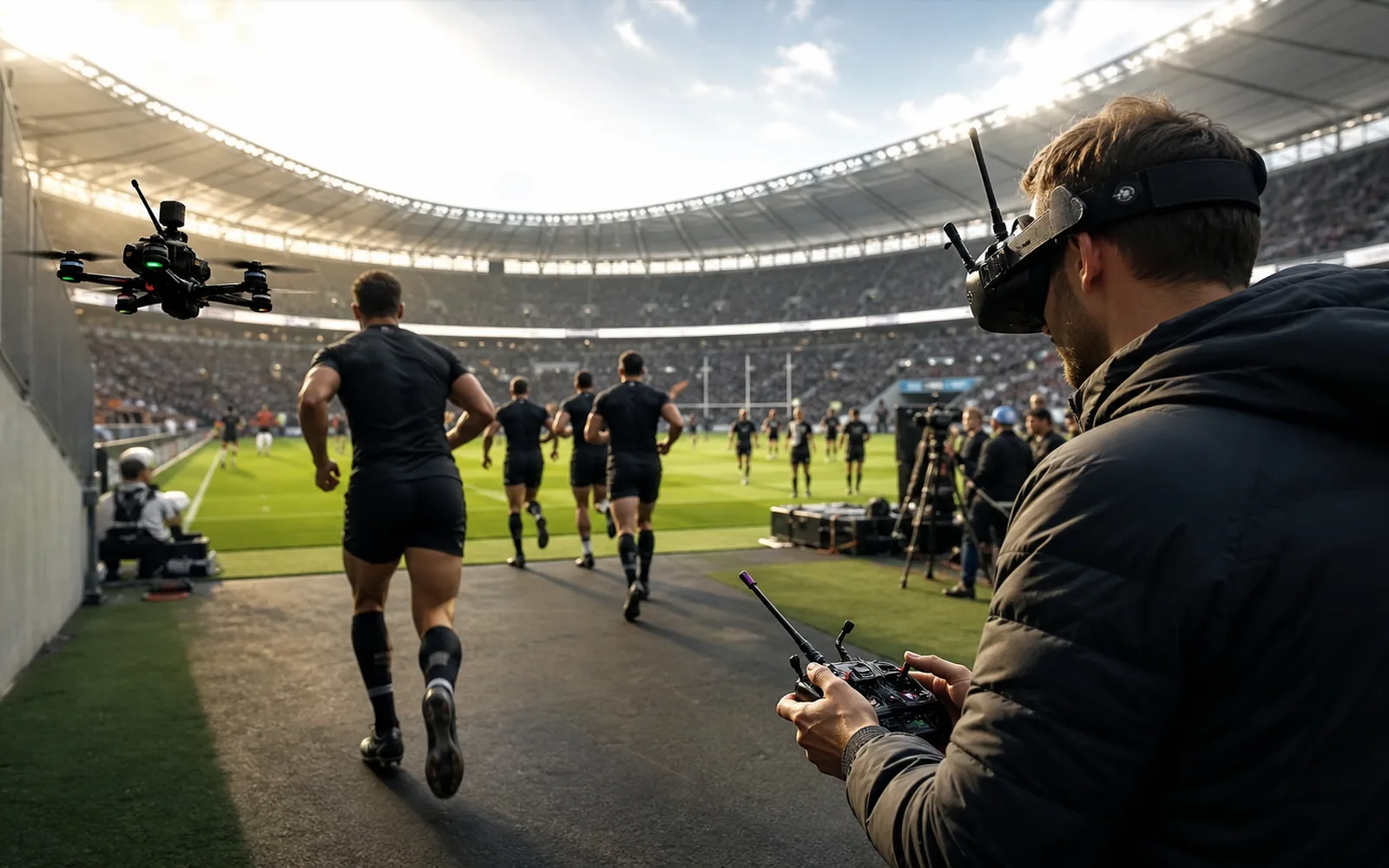
Map the athlete and camera lines separately
Record the subject's normal path, acceleration points and stopping distance before placing the aircraft. Mark where the drone can follow, cross or reveal without entering the athlete's recovery area. The pilot, spotters and subject need the same names for each cue. A diagram and a walking rehearsal often reveal conflicts that are difficult to notice once both movements are fast.
Choose proximity that preserves performance
A closer camera is not automatically more exciting. Distance should protect the athlete's focus and keep body movement readable in the frame. Use longer follow lines for speed and controlled lateral or rising moves for changes in scale. Capture at least one wider reference take; it gives the editor context and protects the sequence if the closest pass is unusable.
Build repeatable takes and stop conditions
Define the start cue, abort cue and safe destination for both athlete and aircraft. Limit the number of demanding repetitions and review framing early. Wind, fatigue, spectators and changing light can alter the plan. The team should know which conditions end a setup rather than negotiating that decision while the subject is already moving.
Shoot for the campaign format
A team launch, equipment film and live-event recap require different moments. Identify the hero action, portrait-safe framing and sponsor visibility before the route is finalized. Record clean beginnings and finishes, crowd or environment sound and a few stable details. These elements allow a short FPV pass to become part of a complete campaign edit.
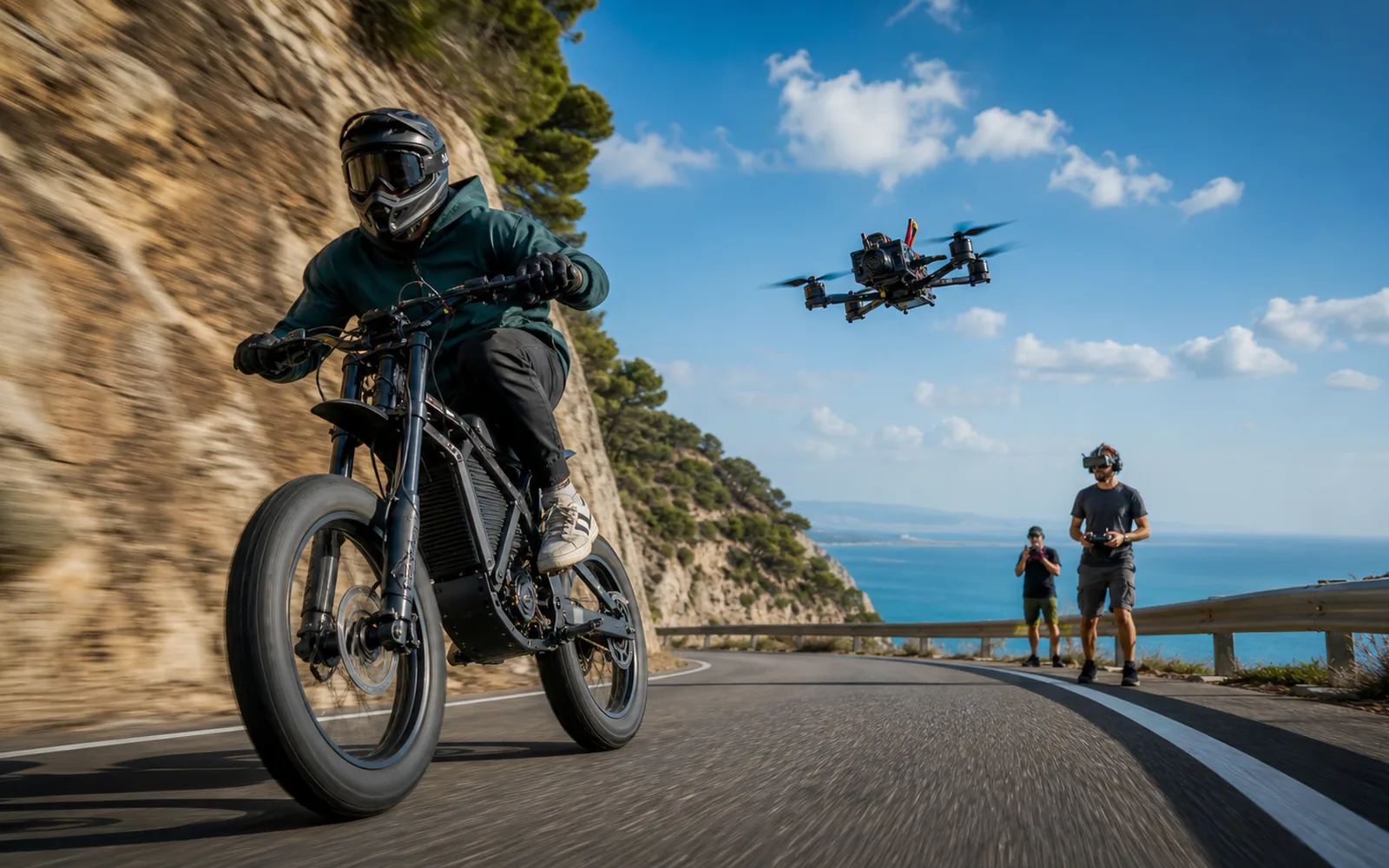
Production checklist
- Draw athlete and aircraft paths
- Name every start and abort cue
- Protect the subject's recovery area
- Limit demanding repetitions
- Capture wide context and campaign details
For a concrete example of movement designed around a subject and location, review the stadium scale and reveal in Le Loup Stadium Tour. The pilot profile and equipment overview explains how Olivier approaches route planning and project preparation.