Thai massage school video brief
A practical video brief for a Thai massage school
Prospective students are comparing more than rooms and course dates. They want to see how instructors explain, how practice is supervised and whether the environment feels organized. A useful school film follows that decision process. It combines orientation, teaching evidence and student perspective instead of turning a classroom into a generic wellness montage.
Structure the film around student questions
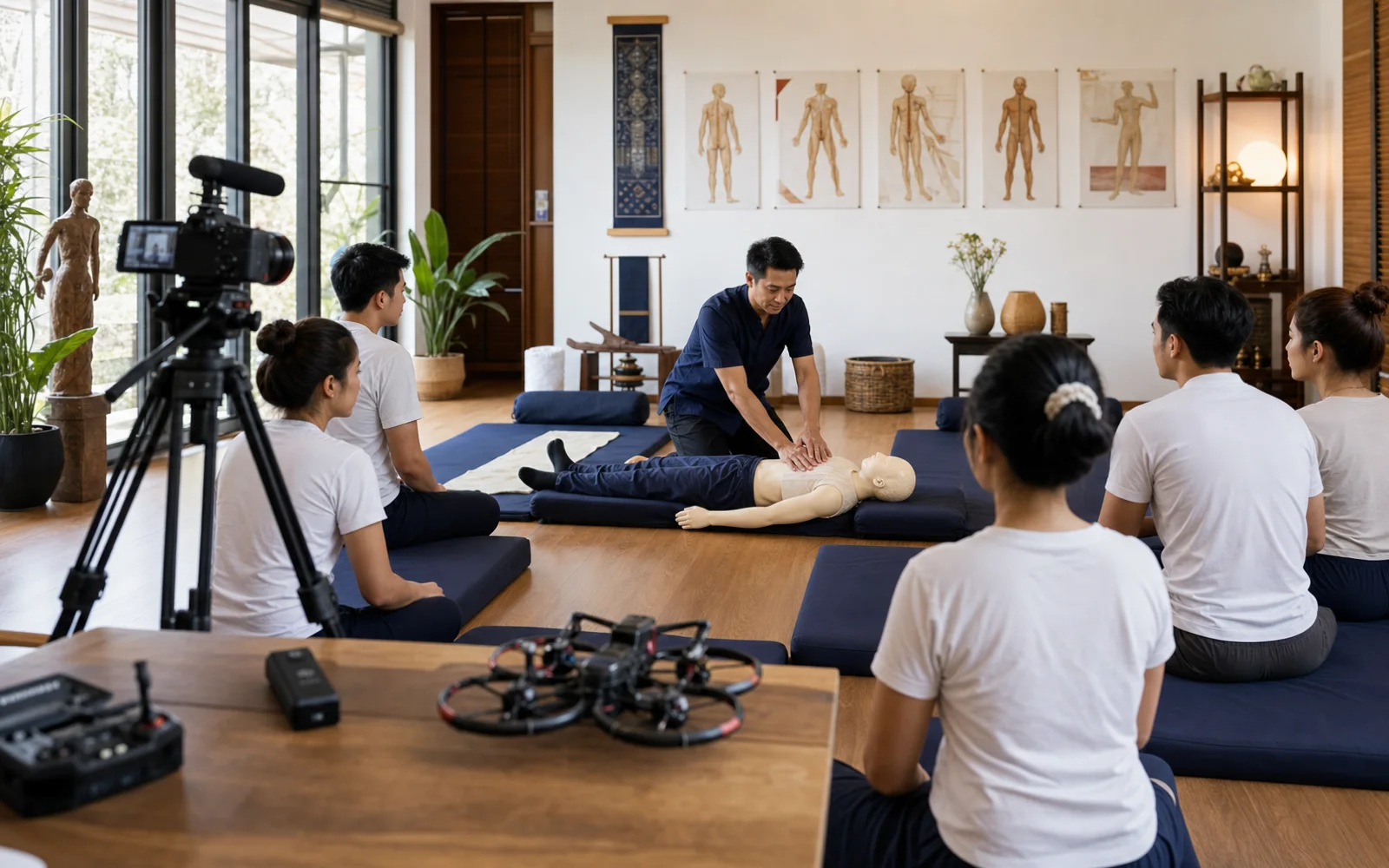
List the questions a serious applicant asks before enrolling: who teaches, how corrections are given, how much supervised practice is included and what a normal class feels like. Each scene should answer one of those questions. An exterior or reception shot establishes arrival, but the centre of the film should be the teaching process. Avoid certificate close-ups or staged smiles that are not connected to a clear explanation.
Show instruction before atmosphere
Record a complete explanation, the instructor's demonstration and the student's supervised attempt. Medium-wide frames preserve posture and spacing; selected close frames can show a correction. Atmosphere shots of mats, equipment and shared spaces support the story after the teaching evidence is secure. This order keeps the film useful even if the final edit is shortened for a course landing page.
Plan participation and permissions early
Decide whether students are identifiable, whether interviews will be recorded and which class moments must remain private. Provide an easy way to opt out without affecting participation in the course. A separate demonstration session may be better than trying to film every moment of a live class. It gives the instructor time to repeat movements and protects the learning experience for people who are not part of the production.
Create several admissions assets from one day
The main film can explain the programme, while short clips answer individual questions about the classroom, instructor approach or student support. Portrait interviews, clean room photographs and a few vertical sequences make the same production day useful across the website and admissions follow-up. Every cut should link back to accurate course information rather than relying on broad promises.
Production checklist
- Collect the applicants' real questions
- Film explanation, demonstration and correction
- Record consent before class begins
- Keep non-participants outside the frame
- Deliver a main film plus question-led short clips
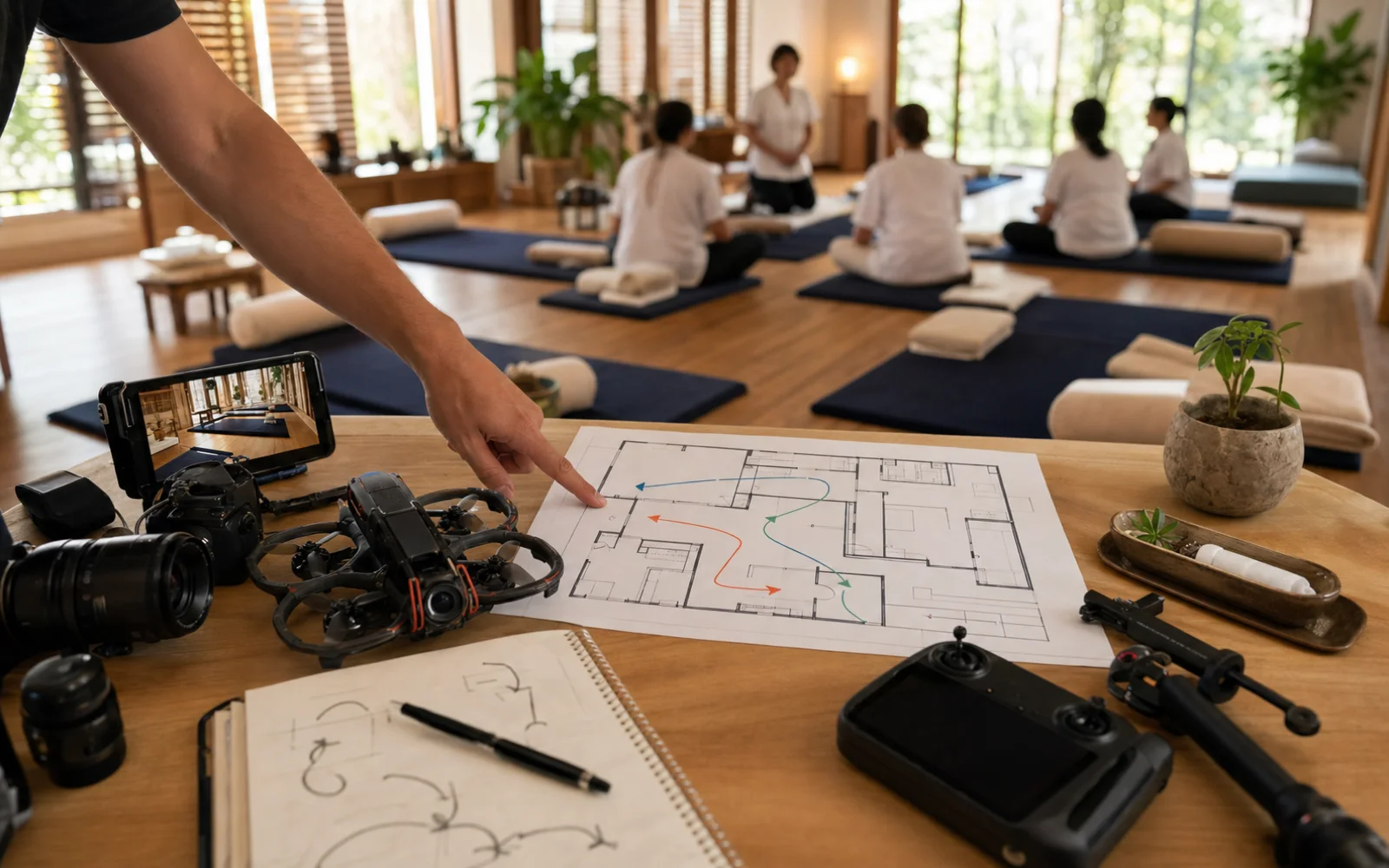
For a concrete example of movement designed around a subject and location, review the subject-led pacing in Justine Gallice Teaser. The pilot profile and equipment overview explains how Olivier approaches route planning and project preparation.